A few years earlier, a production client asked a straightforward concern that kept bothering their money team: what are we really investing in disposable PPE gloves, and is there any type of practical method to reduce it without boosting danger? The plant supervisor promised glove use was under control. The EHS lead was focused on Cross-contamination avoidance and quality assurance. Procurement was obtaining pressure to hold costs level. No person had the full picture.
We built an ROI calculator for PPE gloves recycling and ran a pilot. The numbers surprised everyone, not because of a huge single discount, but due to steady operational savings that stacked up week after week. This study walks through the model, the area experience, and the genuine cost vehicle drivers that matter. If you're on the hook for PPE invest, compliance, or sustainability metrics, you'll discover sensible data here.
The baseline: what disposable really costs
Most companies see glove expense as the billing from the representative. That line thing is the tip of the iceberg. The straight price of nitrile or latex disposables is easy to track, however a number of other fees conceal in procedures:
- Upstream prices: procurement admin time, products costs throughout supply crunches, and minimum-order amounts that swell on-hand inventory. Downstream costs: waste carrying, contaminated materials premiums if gloves are contaminated by certain process chemicals, and compactor maintenance. Soft costs: stockouts that stall a production line, emergency purchases inflated rates, and the periodic quality event linked to poor glove integrity.
Even in non-sterile environments, a medium-sized facility can experience 500,000 to 1,500,000 pairs annually. At 7 to 12 cents per non reusable nitrile handwear cover in regular markets, that's 70,000 to 180,000 dollars for gloves alone, prior to any waste or handling. In unpredictable markets, costs can increase. The waste side usually includes 0.03 to 0.08 dollars per glove, depending on compaction, carrying regularity, and waste category. When we add labor time to take care of supply and bins, the fully filled price per glove commonly lands 30 to 60 percent higher than the unit price.
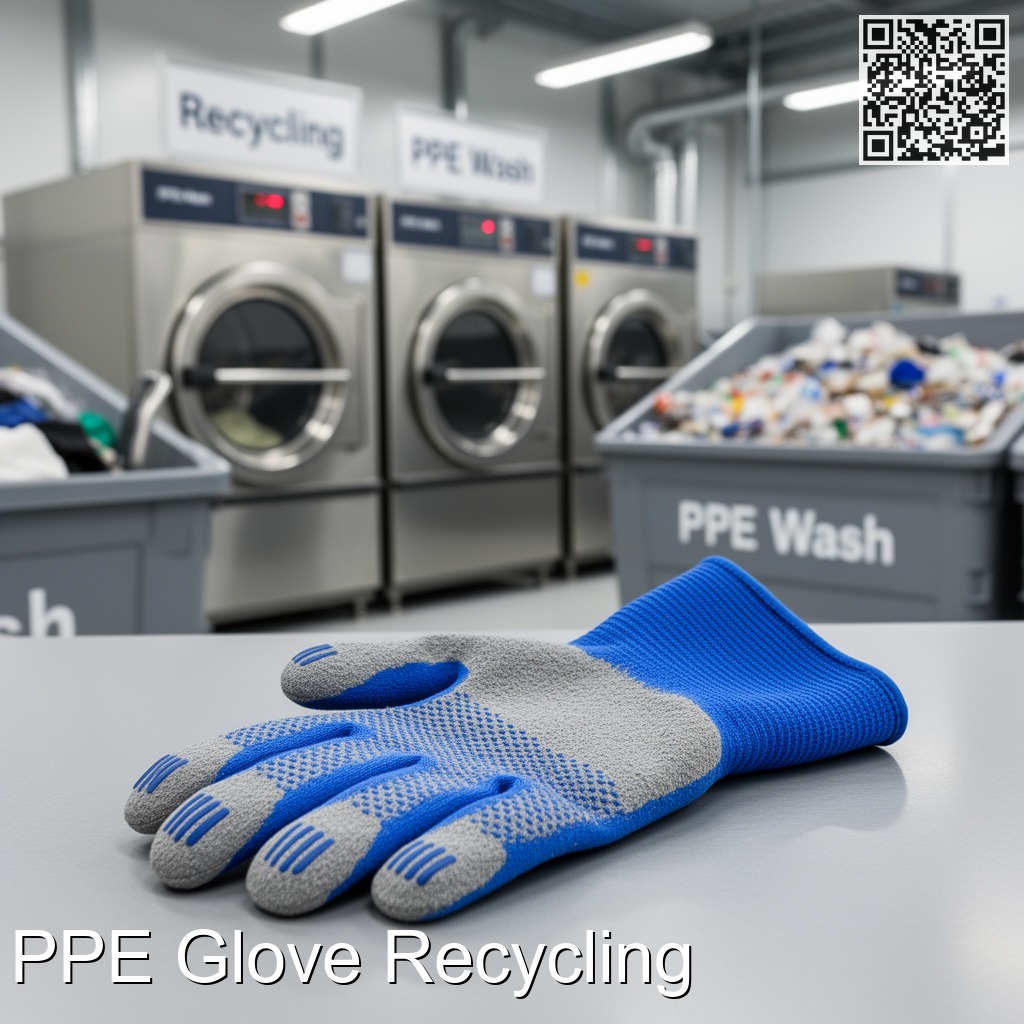
Now take into consideration the conformity danger that presses groups toward "solitary usage for whatever." It is secure, yet it also drives habit-based usage. A glove used for 10 seconds can wind up in the exact same waste stream as one used for hours. That's where a closed-loop handwear cover cleansing and PPE gloves recycling program gains attention.
What a recycling program truly means
PPE gloves recycling is not throwing handwear covers into a blue container and wishing for the very best. The successful programs I have actually seen, consisting of those supported by Libra PPE Recycling and comparable service providers, rely on a circular economic climate model that focuses on clean collection, traceable logistics, commercial handwear cover cleansing, and quality assurance for reissue or product recuperation. There are 2 sensible results:
- Cleaning and returning handwear covers to solution for appropriate usage cases. Processing worn or non-cleanable gloves into secondary products, staying clear of garbage dump and minimizing virgin product demand.
Not every handwear cover and not every area qualifies. You do not recycle sterile medical gloves made use of in an OR. You don't edition gloves from a solvent line back into QA sampling. The program's reputation hinges on a solid sorting procedure and recorded Cross-contamination prevention. The https://riveraqsi026.wpsuo.com/cross-contamination-prevention-in-glove-cleansing-workflows ahead of time job consists of threat assessment by area, chemical compatibility evaluations, and stakeholder buy-in from EHS, Top Quality, and Operations.
When done effectively, the stream of gloves designated for cleansing can yield 2 to 6 reuses per pair, depending on product, application, and tidiness requirements. Also if just a portion of the complete handwear cover usage enters the reusable stream, the impact on spend is tangible.
Building the ROI calculator: the variables that matter
The heart of a reputable ROI calculator is openness. If you can not inspect each assumption, the tool becomes a sales prop, not a decision tool. Here are the bars we consist of and how they play in the real world:
- Annual glove usage by area. Split risky locations from low-risk, and include reusables already being used. A great starting factor: storage facility, production line, maintenance, QA sampling, and packaging. Unit costs by glove type. Costs move, so use an array. If your supply contract has escalators, mirror them. Reuse factor. Conservative estimates by area. For light setting up nitriles, we utilize 2 to 3 cycles. For thicker reusables, 4 to 8. For any kind of location with oils or inks, we dial it down. Sorting compliance price. No person hits 100 percent. We model 60 to 90 percent adherence in the very first quarter, climbing to 85 to 95 percent after training and behavior nudges. Cleaning expense per handwear cover. This includes collection containers, pick-up, handling, QA, and return logistics. Carriers like Libra PPE Recycling publish ranges or quote site-specific rates. Waste disposal price. Garbage dump or energy-from-waste rates plus carrying. Hazard costs if applicable. Labor touch time. Minutes weekly to manage collection points, swap liners, and phase returns. Compare against existing time spent replenishing disposables and servicing trash. Quality holdbacks. A percentage of cleaned up handwear covers that do not meet common and most likely to product recovery. We model 5 to 15 percent, relying on soil profile.
By readjusting these sliders, the calculator outputs three numbers management appreciates: total yearly cost with status, overall yearly cost with reusing program, and net financial savings. The second page ought to show a sensitivity graph, due to the fact that the reuse aspect and sorting price are your swing variables.
A genuine manufacturing facility example: electronic devices setting up, 420 staff
An electronics client running two changes in a 250,000 square foot center had a tidy environment requirement, however not sterilized. PPE included non reusable nitrile handwear covers for setting up and inspection, much heavier reusables for maintenance and delivery, and occasional specialized handwear covers for solvent handling.
Baseline snapshot:
- Annual disposable gloves: 1.1 million items (550,000 pairs). Disposable glove device cost: 0.10 dollars per handwear cover, indexed quarterly. Waste cost attributable to gloves: 38,000 bucks each year, based upon audit sampling. Unplanned buys throughout scarcities: 12,000 to 25,000 dollars in a negative year.
We ran the ROI calculator with a conservative design:
- Eligible zones for handwear cover cleansing: assembly, packaging, and warehousing. Left out QA labs making use of solvents and ESD-critical touchpoints that required brand-new gloves for each assessment cycle. Expected reuse element for qualified areas: 2.4 average cycles per pair, recognizing some handwear covers would certainly be retired after a solitary reuse. Sorting conformity ramp: 75 percent in quarter one, 90 percent by quarter three, continual afterwards with quarterly refreshers. Cleaning and logistics cost: 0.07 dollars per handwear cover cycle, inclusive of containers and pickups. Quality holdback at the cleansing center: 10 percent of collected handwear covers diverted to material recovery.
Program modifications:
- Disposable need fell by 38 percent in six months, after that maintained at 42 to 45 percent decrease as conformity improved. Waste quantity went down enough to remove one compactor pull monthly, a quiet financial savings that rarely shows on the very first readout.
Financial result after a full year:
- Status quo forecasted complete price: 158,000 dollars gloves + 38,000 bucks waste + 7,000 dollars admin = 203,000 dollars. With recycling: 98,000 bucks gloves + 52,000 dollars cleaning and logistics + 21,000 dollars waste + 9,000 dollars admin = 180,000 dollars. Net savings year one: roughly 23,000 dollars. Year 2 projection: 35,000 to 45,000 dollars as onboarding prices go away and recycle performance improves.
Did this upend their budget? No. Did it meet their CFO's difficulty price? Yes, since the program's repayment window was under 9 months and the operational risk was low.
Where the financial savings actually come from
If you look only at the cleansing fee, the economics can really feel limited. But the worth sits in 3 pails that run together:
- Reduced acquisition volume. Every reuse displaces a fresh set. Also a 25 to 35 percent decrease in eligible areas moves the needle. Lower waste prices. Drawing away weight and quantity issues, particularly where glove thickness artificially pumps up compactor pulls. Facilities that pay ecological costs linked to landfill reduction targets likewise count this as a conformity advantage. Fewer emergency gets. A round economy version constructs barrier. Cleaned inventory returns to the center, so your threat throughout supply shocks goes down. The calculator must designate a modest probability-weighted advantage right here, not a windfall.
Operationally, groups additionally notice stability in glove high quality. As opposed to changing brands whenever a representative manages appropriations, your program safeguards a constant product mix. That uniformity lowers micro-defects and unexpected rips that cause specialists to double glove.
Risk monitoring and Cross-contamination prevention
Nothing kills a PPE program faster than a contamination scare. Prior to collection containers head out, you need a policy record that is specific, brief, and enforceable. Below's just how we structure it with clients:
- Zone definitions by procedure and threat, with instances of appropriate soils and absolute exclusions. Glove kinds coded by color or cuff mark, streamlining visual checks. If blue nitriles are accepted for assembly reuse, eco-friendly maintenance handwear covers never ever mix in. Bag-in-bin containment that stops gloved hands from speaking to the outside bin during decrease. Think about sharps containers without the danger, just the one-way logic. Supervisor sign-off at shift end. A 10-second glimpse for noticeable contamination conserves an entire set from being rejected at the cleansing facility. Randomized QA on returned gloves. Every palletized return gets a set examination: tensile strength checks, micro-hole discovery, and odor/soil evaluation. Stopping working sets are diverted to material recovery with a clear event record.
These steps satisfy quality groups because they mirror typical manufacturing controls. When operators see that the procedure does not reduce them down, compliance rises.
Environmental responsibility that withstands scrutiny
Leadership teams usually ask if the sustainability benefits are actual or just a feel-good story. The math is uncomplicated if you capture the ideal data. Life cycle assessments reveal that recycling gloves even twice can decrease connected discharges when transport ranges remain affordable and cleaning facilities utilize effective procedures. The most effective programs report:
- Diversion rates by weight and by matter, confirmed by third-party or service provider statements. Energy intensity of the cleansing procedure, in some cases expressed as kilowatt-hours per thousand gloves processed. Material recuperation portions for non-reusable handwear covers, detailing the secondary items produced where applicable.
Libra PPE Recycling and peers in this area promote verifiable numbers since corporate disclosure rules demand them. Environment-friendly declares demand audit routes. Get the coverage tempo into the contract, and request for information granularity by month and by zone when possible.
What concerning quality-critical or sterile environments?
There are locations where glove cleansing is not proper. Clean and sterile production, energetic pharmaceutical ingredient handling, and any process with straight-out biohazard exposure call for stringent single-use plans. Also in these settings, a program can coexist by targeting surrounding tasks: facility upkeep, packaging, additional containment, and non-contact handling. The ROI calculator need to enable you to cordon off red zones and still model cost decreases where feasible.
The various other gray area revolves around chemicals like ketones, chlorinated solvents, and solid oxidizers. Exposure can break down polymer stability in means not obvious to the eye. For these locations, we utilize disposable-only plans or relocate to thicker reusables ranked for the threat and took care of with a various laundering method. Once more, the calculator adapts by setting reuse to no for those zones.
The behavioral side: making reuse easy
The hardest component is not the mathematics. It is changing muscle memory. Professionals grab a brand-new set out of habit. Supervisors favor the fast solution when in doubt. I have seen 3 methods shift actions without drama:
- Proximity defeats plan. Put collection containers specifically where handwear covers come off. If somebody needs to walk twenty actions, they will certainly throw them in the nearest trash. Clear visual cues. Colored containers and glove-matching tags surpass text-heavy indicators. A brief video during change first, played three times the very first week, seals the idea. Feedback loopholes. Post a month-to-month chart of diversion and savings at the group board. When operators see that they assisted in saving 3,800 dollars last month, they care.
Our electronics client added another touch. They tracked which lines hit 90 percent sorting conformity and offered a small group lunch to the top entertainer each quarter. It was low-cost and pleasant, and it worked.
Working with a supplier: what to ask prior to you sign
Service providers vary commonly. Some focus on particular handwear cover types, others supply wider PPE programs. Before introducing, I advise a brief RFP that strikes 5 sensible points:
- Accepted glove kinds and dirts, with created acceptance standards and being rejected examples. Cleaning and QA methods, consisting of examination requirements for micro-perforations and tensile strength. Logistics design: container kinds, pick-up regularity, chain-of-custody paperwork, and contamination case handling. Reporting: monthly diversion data, batch top quality results, and greenhouse gas equivalency reporting with method notes. Program business economics: all-in processing charge, container costs, minimal volumes, and any type of refunds for material recovery.
Libra PPE Recycling has actually been receptive on these fronts in my experience, particularly on QA documentation and transparent denial rates. Whichever provider you select, insist on a pilot with two or 3 zones for 8 to 12 weeks prior to scaling.
The ROI calculator in action: a streamlined walk-through
Let's trace a hypothetical midsize food-packaging plant evaluating the program for 3 areas: packaging, stockroom, and maintenance.
Inputs:
- Annual gloves by area: packaging 400,000, warehouse 150,000, maintenance 50,000. Unit price: 0.09 bucks per handwear cover average. Waste cost attributable to gloves: 0.035 bucks per handwear cover disposed. Cleaning fee: 0.065 bucks per handwear cover cycle. Eligible for reuse: product packaging and stockroom. Maintenance left out because of oils and sealants. Reuse variable: packaging 2.2, warehouse 2.5. Sorting compliance: product packaging 85 percent, storehouse 80 percent. Quality holdback: 12 percent overall.
Calculator flow:
- Determine eligible handwear cover count: packaging 400,000 x 85 percent = 340,000 gathered; storage facility 150,000 x 80 percent = 120,000 collected. Apply holdback: 340,000 + 120,000 = 460,000. Holdback at 12 percent sends out 55,200 to material recovery, leaving 404,800 entering cleaning cycles. Apply reuse: 404,800 cycles balance out need for brand-new handwear covers, separated by typical reuse. Weighted by zone, the design offsets approximately 180,000 to 190,000 gloves purchased. Update costs: subtract prevented acquisitions, add cleansing charges for every cycle, decrease waste prices based upon diverted volume.
Result:

- Status quo glove purchase: 600,000 x 0.09 = 54,000 bucks. Waste cost: think 600,000 x 0.035 = 21,000 bucks. Total straight: 75,000 dollars, plus admin time. With recycling: handwear cover purchase come by concerning 185,000 devices, conserving 16,650 bucks. Cleaning up charges: 404,800 x 0.065 = 26,312 bucks. Waste drops by about 40 percent for qualified areas, conserving regarding 8,400 bucks. Web direct cost savings lands near 14,700 bucks, prior to admin modifications. With steady-state improvements, the annualized number commonly pushes into the low 20,000 s.
It is not flashy, yet it is dependable. Facilities that layer in compactor pulls stayed clear of or company sustainability credit histories typically discover a bit extra worth on top.
Making the numbers stick for financing and EHS
Finance wants a defensible narrative. EHS desires assurance that Cross-contamination prevention is closed. Develop both into your program strategy:
- Document assumptions with resource information: distributor invoices for device price, hauler bills for waste prices, and time researches for handling. Pilot and measure: track handwear cover matters, container weights, and QA outcomes by batch. Photograph bins at shift change during the initial 2 weeks to show correct use. Forecast with varieties: present conventional, anticipated, and best-case financial savings. The ROI calculator should demonstrate how a 10 percent dip in arranging conformity influences the outcome. Establish an acceleration course: contamination event response, declined batch handling, and re-training triggers.
When both groups see that the technicians are audio, the conversation transforms from "should we do this?" to "just how quick can we scale?"
A straightforward consider edge cases and trade-offs
No program is ideal. A few facts worth acknowledging:
- Freight distance matters. If your facility sits far from the cleansing center, logistics can munch at savings and emissions gains. Seek combined pick-ups or local partners. Low-volume sites battle. If a place eats less than 75,000 to 100,000 handwear covers every year, your per-unit cleaning cost can climb. Consider organizing with neighboring websites on one contract. Culture counts. Plants with solid five discipline adopt swiftly. Sites with high turnover demand reoccuring training and aesthetic signs to maintain compliance. Not all gloves repay. Ultra-thin specialized nitriles utilized in exact instrumentation can tear on elimination, limiting reuse. Maintain those out of the program, and do not force it. Commodity swings cut both means. When glove prices crash, savings shrink. When they spike, the program's worth expands. The ROI calculator ought to show this sensitivity.
Transparency on these factors builds depend on. People area overselling a mile away.
Tying it back to a circular economic climate model
A circular economic situation design for PPE does not aim for excellence. It aims for far better. Relocating a portion of your PPE stream from single-use to reuse changes the formula in 3 means. Initially, it decreases product throughput without compromising safety due to the fact that the reuse is controlled. Second, it keeps worth distributing inside your operation, specifically during supply disruptions. Third, it develops measurable Ecological obligation outcomes that feed corporate reporting with actual numbers rather than offsets alone.
Providers like Libra PPE Recycling built their organization on those premises, but the design only works when the facility does its part: tidy collection, self-displined sorting, and data sharing. The ROI calculator helps you established expectations, however the everyday behaviors make the cost savings real.
Where to start this quarter
If you have the cravings to check out PPE gloves recycling, do not wait on a twelve-month research. Choose two areas where soils are light and procedures are steady. Involve your EHS lead on Cross-contamination avoidance guidelines, obtain Procurement to confirm expenses, and align a carrier that will certainly devote to information transparency. Run the ROI calculator with conservative assumptions, then pilot for eight weeks. Step everything you can gauge without slowing the job. Share the numbers with the floor group and the management group.
If the savings match the model within ten percent either way, scale. If they miss, repair both common suspects: arranging compliance and reuse factor. Little modifications create outsized effects.
PPE, at its ideal, shields individuals and item without dramatization. A well-run handwear cover cleansing program does the exact same for your budget. It is not attractive, and it will certainly not be the largest line on your sustainability report, yet it is one of those useful changes that keeps paying off long after the kickoff meeting ends.
Libra Industries Inc
1435 N Blackstone St, Jackson, MI 49202
+15177875675
| Place ID | ChIJt_HMH44vPYgRNbiD22DpHYo |
| CID | 9952367353767639093 |
| Business Profile ID | 6301257705288912858 |
7H9Q+2G Jackson, Michigan
| Coordinates | 42.26760060, -84.41112540 |
 Ask ChatGPT
 Ask Grok
 Ask Perplexity
 Ask Claude
 Ask Google AI
 Ask You